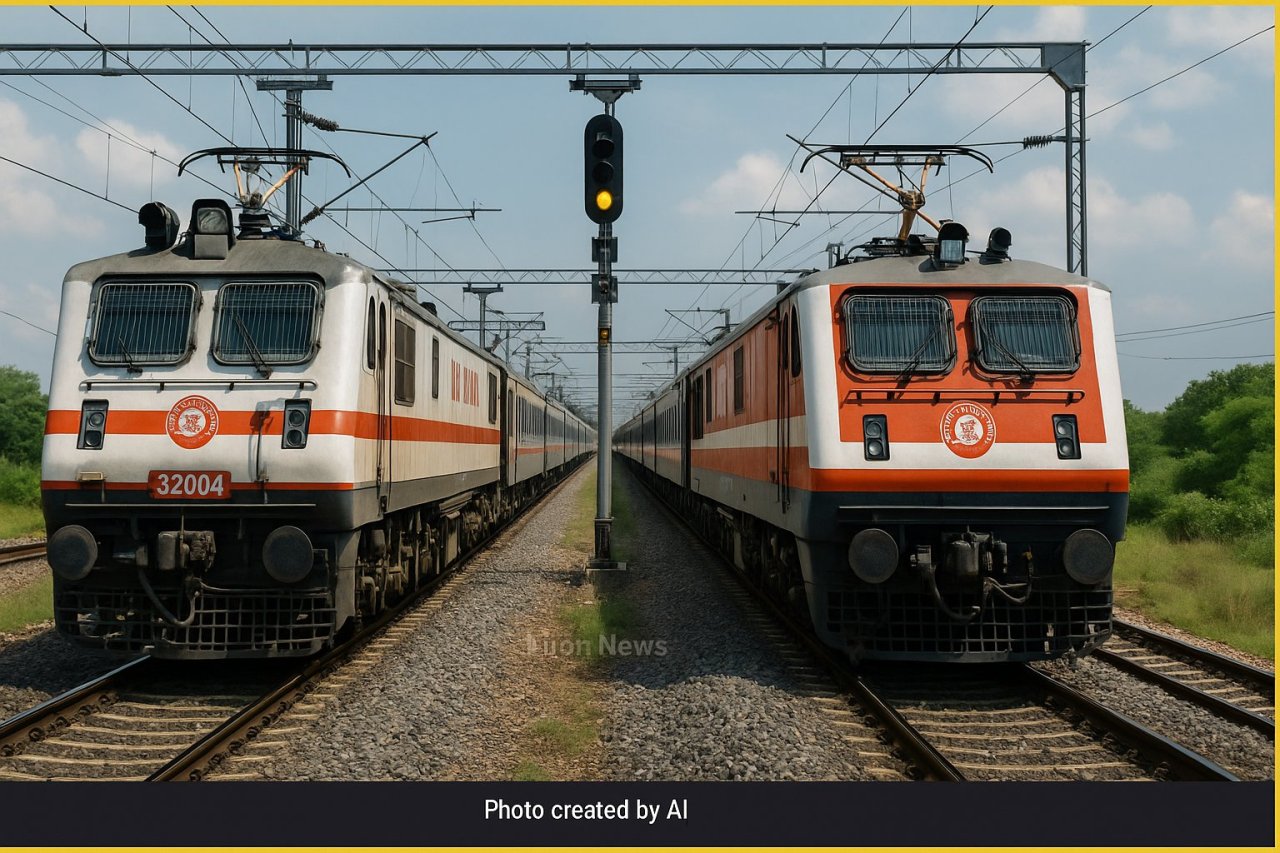
Jodhpur, September 28 (Udaipur Kiran News): In a major step toward ensuring safe train operations, the Indian Railways has approved a ₹2,300 crore project to equip the entire North Western Railway zone, including Jodhpur, Ajmer, Jaipur, and Bikaner divisions, with the indigenous Kavach 4.0 anti-collision system. Once implemented, the 5,561-km railway network across these divisions will become fully collision-resistant.
According to Shashi Kiran, Chief Public Relations Officer of North Western Railway, safety remains the top priority for Indian Railways. The organisation is continuously adopting modern technologies and innovations to enhance secure train operations. The upgraded signaling and safety system plays a crucial role in achieving this goal, and the installation of the Kavach system is progressing across the zone.
He added that tenders are already underway for implementing the Kavach system on the remaining routes in all four divisions. Once completed, the North Western Railway will achieve a robust and highly reliable safety network.
What is the Kavach System?
Kavach is an indigenously developed train protection system designed to prevent accidents by monitoring and controlling train speed. It is built to meet Safety Integrity Level 4 (SIL-4) — the highest level of safety certification.
Development of Kavach began in 2015, followed by extensive testing over more than three years. The system was first deployed on the South Central Railway, receiving its first operational certificate in 2018. Based on operational experience, an upgraded version — Kavach 4.0 — was introduced and approved in May 2025 for use at speeds up to 160 km/h.
All components of Kavach are manufactured in India, supporting the government’s ‘Atmanirbhar Bharat’ initiative.
Once fully installed across the North Western Railway, train collisions will be effectively prevented, and passenger safety will reach international standards.
Bhupendra Singh Chundawat is a seasoned technology journalist with over 22 years of experience in the media industry. He specializes in covering the global technology landscape, with a deep focus on manufacturing trends and the geopolitical impact on tech companies. Currently serving as the Editor at Udaipur Kiran, his insights are shaped by decades of hands-on reporting and editorial leadership in the fast-evolving world of technology.