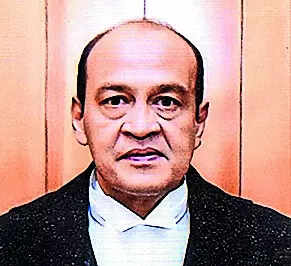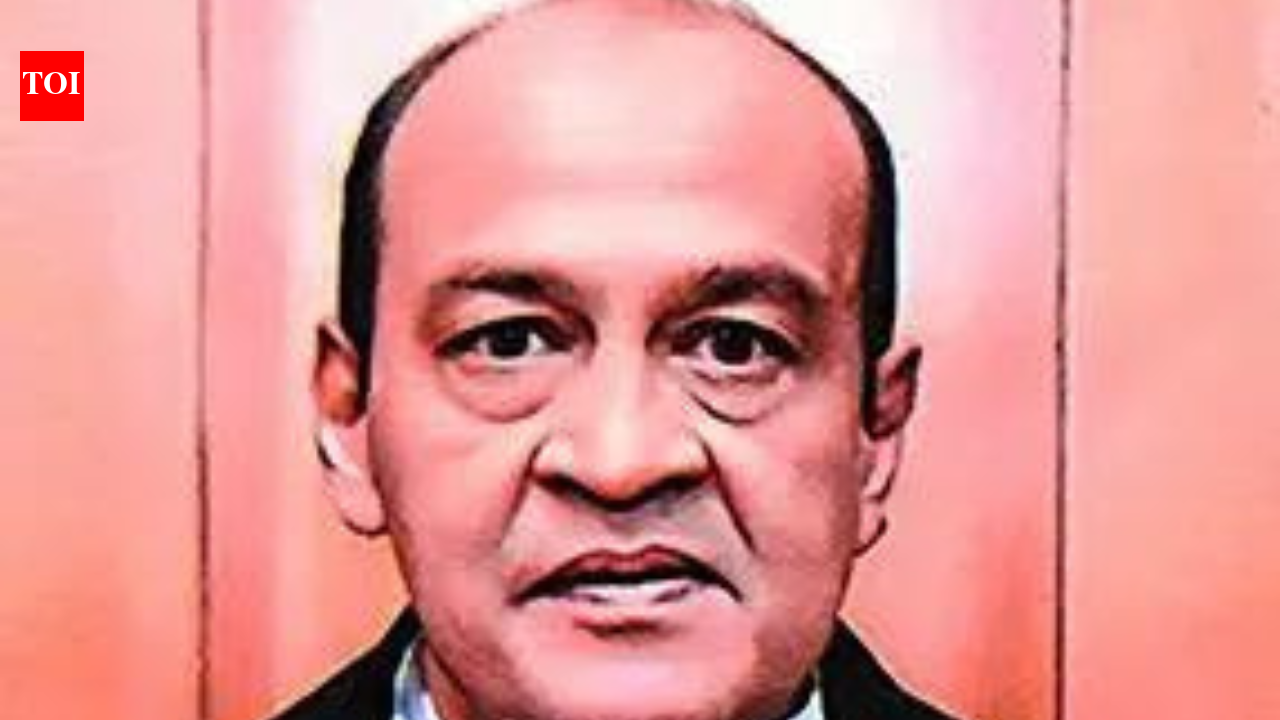
NEW DELHI: Holding that the Judges (Inquiry) Act cannot be interpreted in a manner that frustrates its objective, and constitutional safeguards for judges cannot come at the cost of paralysing the removal process itself, Supreme Court rejected Allahabad high court judge Yashwant Varma’s plea against the Lok Sabha Speaker’s decision to appoint a committee on the motion to remove him. It said the Speaker has committed no illegality.Though SC held that the Rajya Sabha deputy chairman was competent to refuse admission of notice of motion, it, however, said the manner in which the notice of motion was processed at the secretariat level does not fully align with the role contemplated under the law. The bench of Justices Dipankar Datta and Satish Chandra Sharma refrained from examining the validity of the deputy chairman’s order as it was not challenged by Justice Varma, but said it would have no effect.On July 25 last year, a notice on the motion to remove Justice Varma from his position was signed by over 100 LS members and it was received by the Speaker around 12.30pm, but was not admitted on the same day. After a brief interval, between 4.07pm and 4.19pm, a notice signed by more than 50 members was given in RS.Referring to the first proviso to Section 3(2) of the Act, which contemplates a situation in which notices are given in both Houses on the same day, the RS chairman directed that “the secretary general will take necessary steps in this direction”, but on the same day the chairman resigned from his office of vice-president of India.Senior advocate Mukul Rohatgi, appearing for Justice Varma, submitted that when notices of motion are given on the same day before both Houses, judicial inquiry committee (JIC) could not have been constituted unless both Houses had admitted the motions. JIC has to be constituted jointly by the Speaker & the chairman, he said. Countering his contention, solicitor general Tushar Mehta said Section 3(2) is attracted only where the motions are “admitted” in both Houses, and not just being “given”.Rejecting Varma’s plea, the bench said the provision does not contemplate a scenario where a notice of motion is accepted in one House and rejected in the other. “To interpret the said proviso in the manner suggested by Rohatgi would require us to read into it a disabling consequence, namely, that the motion pending in the other House must also necessarily fail. Such an interpretation would amount to judicial legislation, a course we are neither empowered nor inclined to undertake,” it said.“There is nothing in the Inquiry Act to suggest that rejection of a motion in one House would render the other House incompetent to proceed in accordance with law. The argument, therefore, lacks any legal foundation. The interpretation advanced by the petitioner of rejection of a notice in one House resulting in the notice automatically failing in the other House would entail consequences of a most serious nature,” the bench said. “The members would be put to square one and the process has to be initiated afresh in either House. Had Parliament intended such far-reaching consequences, it would have articulated the first proviso in clear and unambiguous terms. The absence of any express provision to that effect is, in our opinion, determinative,” it said.The bench said accepting such an argument would produce absurd results where the individual capacity of one House in initiating a motion under Article 124(4) becomes contingent upon the outcome in the other House, even at the stage of admission of such a motion. It said taking away the autonomy of one of the two Houses of Parliament could not have been the intent behind the first proviso.“The proviso applies to only one specific situation, namely, where notices of motion given on the same day have been admitted by both Houses. It does not restrict or negate the individual authority of either House of Parliament,” it said.“The first proviso must, therefore, be construed to balance prescribed protection with the effective functioning of the mechanism for removal of a judge from office triggered by the peoples’ representatives, and not to frustrate it altogether,” it said.