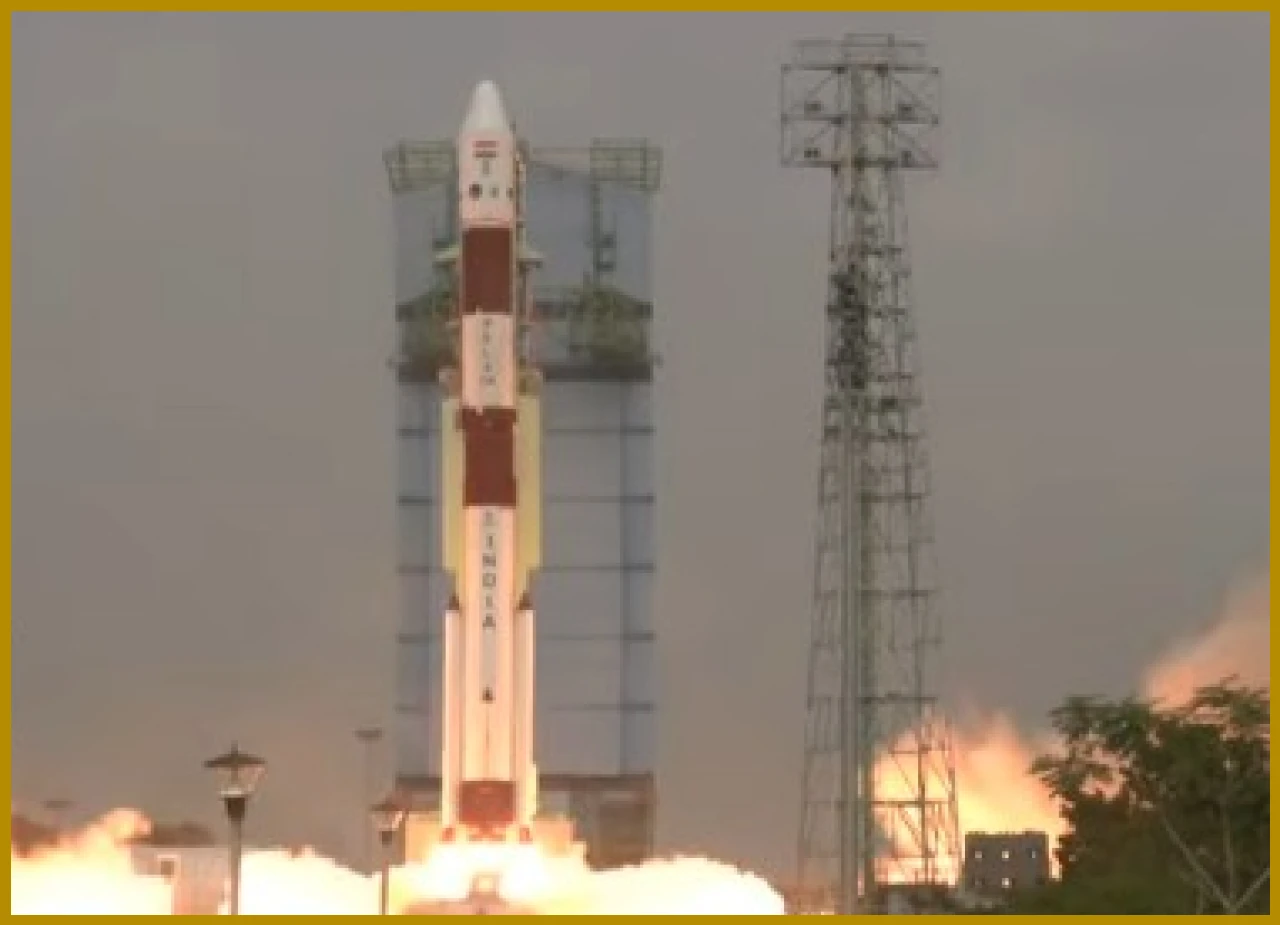
Indian Space Research Organisation (ISRO) successfully launched its first satellite mission of 2026 on Monday at 10:17 AM from the Satish Dhawan Space Centre in Sriharikota, Andhra Pradesh. The mission used the Polar satellite launch Vehicle (PSLV)-C62 rocket.
A total of 15 satellites were sent into space during this mission. The primary satellite among them is the Earth Observation Satellite (EOS-N1) named Anvesha.
ISRO shared the update on the social media platform X, stating, “Liftoff! PSLV-C62 has launched the EOS-N1 mission from SDSC-SHAR, Sriharikota.”
The Anvesha satellite has been developed by the Defence Research and Development Organisation (DRDO). The launch aims to enhance India’s remote sensing capabilities in agriculture, urban mapping, and environmental monitoring.
Equipped with advanced imaging systems, Anvesha is expected to significantly improve data collection for these sectors. Ahead of the launch, ISRO also announced that the PSLV-C62 mission would demonstrate a small-scale prototype of a re-entry vehicle developed by a Spanish startup called KID or CESTREL Initial Technology.
This mission marks an important milestone for India’s private space sector as it is the first time an Indian private company has played a major role in a PSLV mission. The PSLV is considered one of the most reliable launch vehicles globally and has previously been used for notable missions like Chandrayaan-1, Mangalyaan, and Aditya-L1.
PSLV has completed 63 flights so far, including well-known missions such as Chandrayaan-1, Mars Orbiter Mission, Aditya-L1, and Astrosat. In 2017, it set a world record by launching 104 satellites on a single mission.
Earlier in May, ISRO conducted the PSLV-C61 mission, which was the 101st launch aiming to place the 1,696-kilogram EOS-09 Earth Observation Satellite into a 505 km sun-synchronous polar orbit. However, a technical glitch during the third stage prevented full mission success.
Bhupendra Singh Chundawat is a seasoned technology journalist with over 22 years of experience in the media industry. He specializes in covering the global technology landscape, with a deep focus on manufacturing trends and the geopolitical impact on tech companies. Currently serving as the Editor at Udaipur Kiran, his insights are shaped by decades of hands-on reporting and editorial leadership in the fast-evolving world of technology.