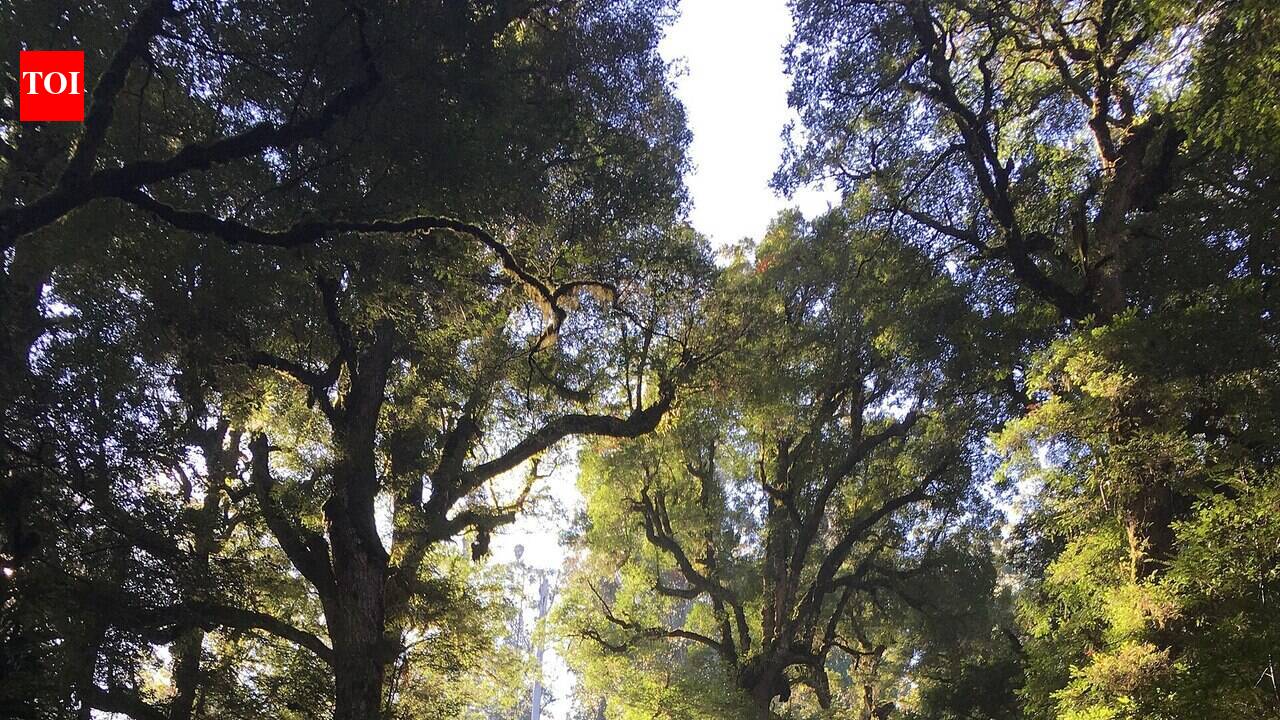
When visualising the mountain tops of southeastern Australia, one might conjure up an image of a typical Alpine environment. We picture ourselves walking under the huge, light-barked cover of the alpine ash tree species, hearing the sound of the wind blowing through the extensive foliage that exists at higher elevations, and breathing in the crisp mountain air. Through environmental stories told generation after generation, these mountain eucalyptus trees have been perceived as centuries-old giants of the Great Dividing Range. It has been believed that these forests thrive due to their perpetual, multi-century life cycle that allows them to cope with time on their own through the process of evolution.But a closer look at these high-elevation ecosystems points to vulnerability, changing fire patterns, and possible biological adaptation. Far from being invincible, these unique alpine forests are actually locked in a desperate, fast-moving race against the changing patterns of global wildfire cycles. Instead of waiting decades to slowly mature and reproduce like their ancestors did, a surprising survival mechanism is emerging from the ash of recent bushfires. What looks like a simple sapling in a burnt clearing may reflect a species adapting its reproductive timing.This critical ecological timeline was recently mapped in a study published in the journal Landscape Ecology. Led by environmental scientists Kaitlyn L. Hammond, Benjamin Wagner and Craig R. Nitschke, the study used computer modelling to forecast a century of forest dynamics across 720,000 hectares of montane territory. By meticulously tracking how different fire intervals interact with tree growth, the authors presented extensive evidence showing that while these iconic woodlands could face a staggering 49 to 65 per cent contraction over the next 100 years, their ultimate survival depends heavily on a newly discovered capacity of young trees to produce viable seeds far earlier than previously assumed.The scientists applied a forest landscape simulation model named LANDIS-II to conduct a 100-year scenario, from 2022 to 2122, for 720,000 hectares of alpine ash forest in southeastern Australia. They tested scenarios where climate change was present and absent, considered seven- and 15-year reproductive maturity conditions, and concluded that the former condition increased the amount of saved forest by an average of 96,000 hectares compared to the latter condition, and the aerial reseeding brought about only a 1–3% increase in retention.Surviving the deadly trap of firesTo see what makes such an increased number of seeds so remarkable for the scientific world, one should consider the peculiar and dangerous reproductive cycle of the alpine ash tree. Unlike most of the eucalyptus tree species that resprout after bushfires, the alpine ash is an obligate seeder species; thus, high-severity fires cause the death of adult trees. The fate of the whole forest depends on a huge number of seeds that are stored in the canopy capsules and fall to the ground to start a new generation of trees.The structural dilemma explored in the study arises when the quiet intervals between devastating bushfires begin to shrink too rapidly. Historically, an alpine ash tree required roughly fifteen years of undisturbed growth to reach full reproductive maturity and build up a sufficient canopy seed bank. However, if a second intense wildfire sweeps through the same mountainside before those young trees have a chance to produce their first batch of seeds, the entire local population is instantly wiped out, leaving behind a barren landscape where native forests are permanently replaced by low-lying shrubs.However, the results obtained by applying innovative landscape modelling revealed that it is this frequent-fire trap that is the main factor of anticipated forest destructions, which operates regardless of changes in the general atmospheric temperature. But the most encouraging fact was that the researchers were able to change the settings of reproductive maturity of the trees under the experiment. The simulation conducted a test in which young alpine ash trees became capable to mature and producing seeds at the age of seven instead of the common fifteen years. In such a case, the additional 96,000 hectares of forests were protected from destruction.
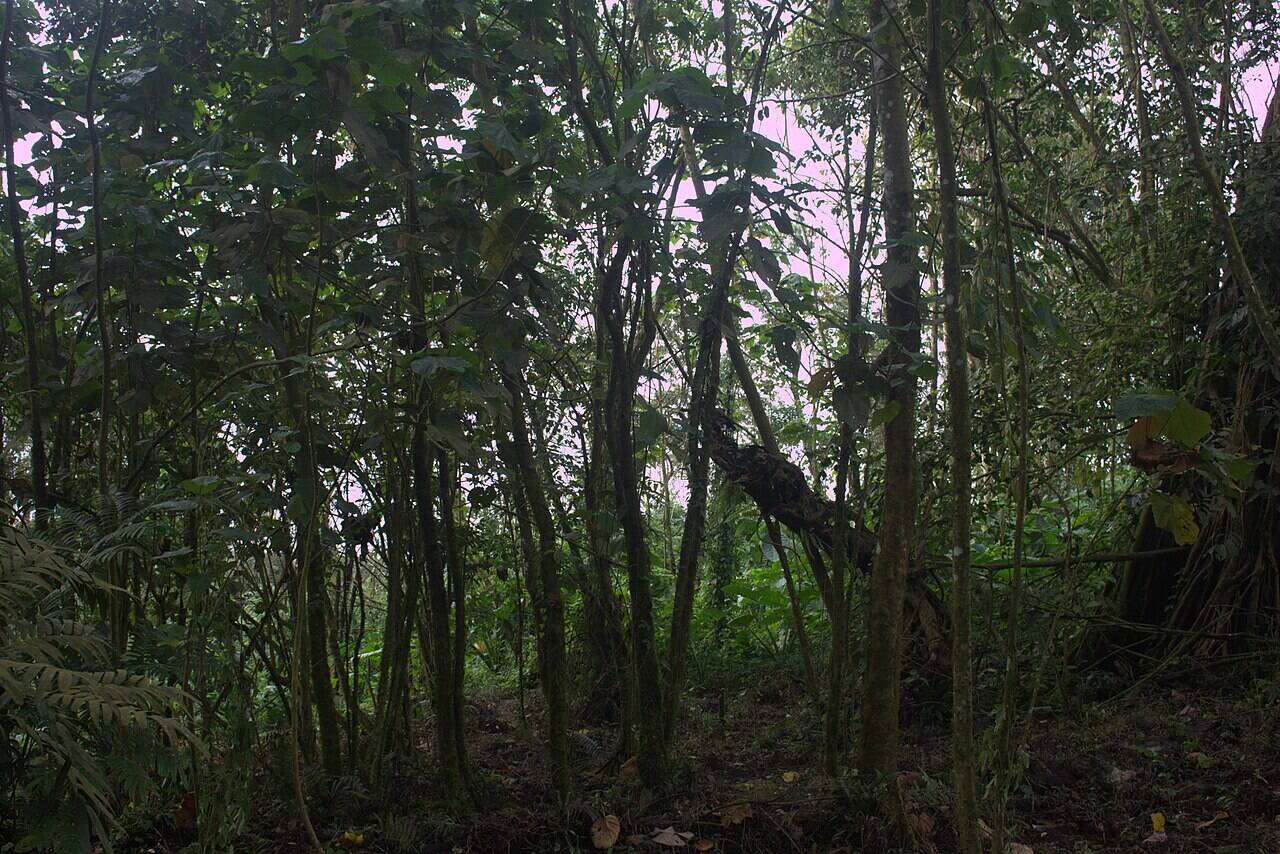
Contrary to past beliefs of resilience, these woodlands are now adapting by reproducing much earlier than previously thought. A new study reveals this accelerated maturity is crucial for survival, offering a glimmer of hope against increasingly frequent and intense bushfires that threaten to wipe out entire generations. Image Credits: Wikimedia Commons
Changing approach to conservation due to a changing landscapeAccording to the results of the study, a new approach to the conservation of these ancient mountain forests is needed now. As the research demonstrates that reproductive maturity of trees plays a bigger role in their survival in the future than the general climate warming tendency, it becomes clear that traditional methods of passive protection will not work anymore.According to the study, relying solely on broad, unguided aerial seed drops across vast landscapes delivers surprisingly limited results, boosting forest retention by a mere one to three per cent. Instead, the study says conservation funding and firefighting resources are more effective when directed through the resist, accept and direct framework. This modern approach advises land managers to identify specific, moderate-risk mountain valleys where young trees are actively demonstrating early seeding traits and focus protective efforts, fuel reductions, and targeted hand-sowing operations directly on those resilient hotspots.This research is indicative of the need for conservation of biodiversity to incorporate small-scale, adaptable responses within nature itself. By illustrating how billions of endangered trees adapt their life cycle in order to cope with diminishing time between fires, the study presents a scientific guide map for conservation of forests around the world.