A newborn wrapped in a blanket, sleeping peacefully in a mother’s arms, often looks like the picture of perfect health. But appearances can sometimes be misleading.For babies born with sickle cell disease (SCD), the first few months of life may pass without any obvious warning signs. Hidden beneath that healthy appearance is an inherited blood disorder that can slowly begin affecting the body as the baby grows. By the time symptoms become noticeable, valuable time may already have been lost.That is why doctors across the world increasingly stress one message: finding sickle cell disease early can save lives and prevent serious complications.In India, where the disease affects thousands of families every year, early diagnosis is becoming a public health priority. The Government of India has also launched the National Sickle Cell Anaemia Elimination Mission, aiming to eliminate sickle cell disease as a public health problem by 2047 through widespread screening, awareness and better access to care.
A healthy-looking baby may still have sickle cell disease
One of the biggest challenges with sickle cell disease is that newborns often do not appear ill.According to Dr Jayant Khandare, Consultant, Pediatrics and Neonatology at Surya Mother and Child Super Specialty Hospital, this early period provides a critical opportunity to act.“A newborn with sickle cell disease (SCD) may appear perfectly healthy. During the first few months of life, fetal haemoglobin provides a degree of natural protection by reducing the sickling of red blood cells. As this protection gradually declines, the disease may begin to reveal itself through swollen hands and feet, recurrent fever, anaemia, or episodes of severe pain.”This temporary protection from fetal haemoglobin means that symptoms often stay hidden for several months. Once those levels naturally decrease, the abnormal red blood cells begin to sickle more frequently, reducing their ability to carry oxygen efficiently.Dr Khandare added, “This symptom-free period offers an important window of opportunity for both families and healthcare providers. When SCD is detected through newborn screening, treatment and monitoring can begin before a serious infection or other complication requires hospitalisation.”Simply put, early diagnosis allows doctors to stay one step ahead of the disease instead of reacting after complications appear.
Understanding sickle cell disease: It’s inherited, not contagious
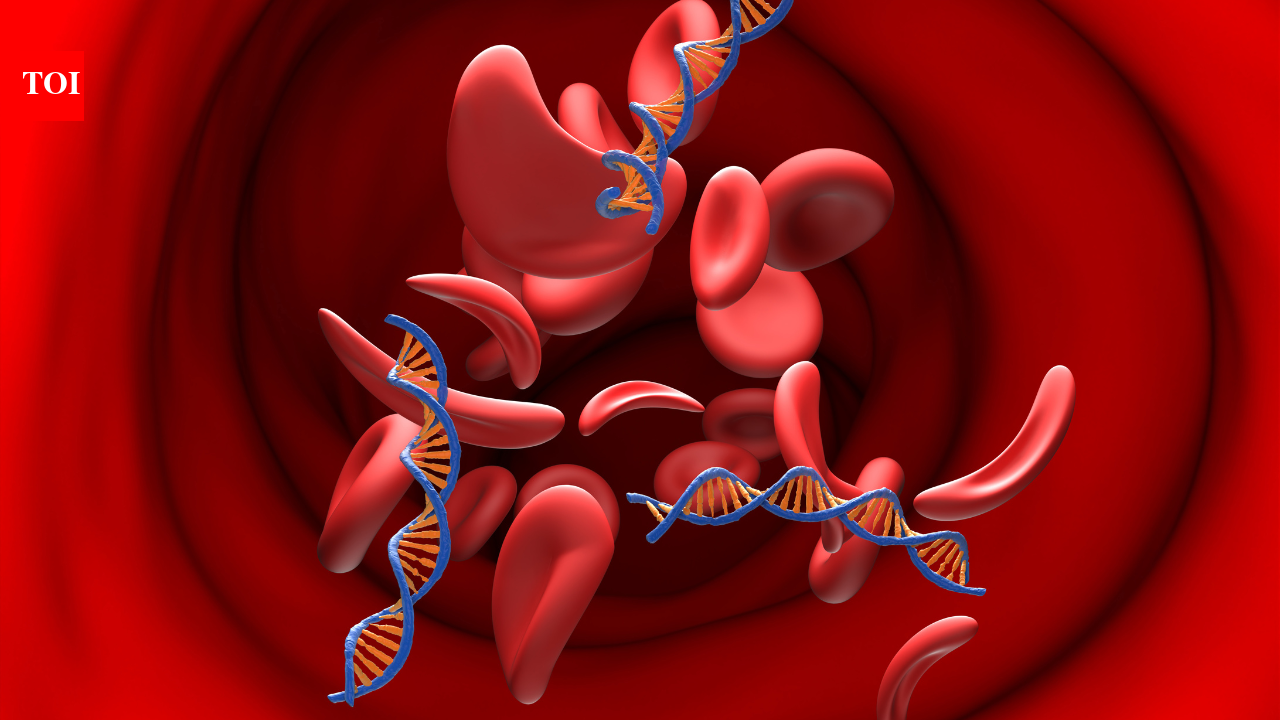
Sickle cell disease is not caused by an infection, poor nutrition or anything that happens during pregnancy. It is a genetic condition that is passed from parents to children.Dr Khandare explained, “Sickle cell disease is an inherited blood disorder. A child develops the condition after inheriting an altered haemoglobin gene from both parents. The disorder causes red blood cells to become rigid and sickle-shaped, leading them to break down prematurely or block blood vessels. Over time, this can result in chronic anaemia, painful crises, recurrent infections, and damage to vital organs.“Healthy red blood cells are round and flexible, allowing them to move smoothly through blood vessels. In sickle cell disease, many of these cells become stiff and crescent-shaped. They can block blood flow, reduce oxygen delivery and trigger repeated episodes of pain and organ damage.Not everyone who carries the gene develops the disease.“Children who inherit the altered gene from only one parent usually have the sickle cell trait. These individuals generally remain healthy but can pass the gene on to their children.”This is why genetic counselling and family screening play an important role, especially in communities where the condition is more common.
Why India carries a significant burden of sickle cell disease
Sickle cell disease is often described as a rare condition globally, but in India it represents a much larger health challenge.Dr Khandare highlighted the scale of the problem, “India carries one of the world’s largest burdens of sickle cell disease. A recent review published in the Wadia Journal of Women and Child Health reported that India accounts for approximately 14.5% of the global SCD burden and has the second-highest number of predicted SCD births worldwide.”The disease is not spread evenly across the country.“Within the country, the disease is more prevalent in parts of central, western, and southern India and disproportionately affects tribal communities. The review estimated SCD prevalence at 4.05% among tribal populations, compared with 0.84% among non-tribal groups.”Recognising this unequal burden, the Government of India has expanded community-based screening and awareness initiatives in high-prevalence districts under the National Sickle Cell Anaemia Elimination Mission.These efforts are not just about identifying patients. They are also about identifying carriers, educating families and helping communities make informed healthcare decisions.
Yet this symptom-free period is one of the most important opportunities to detect the disease early and begin life-saving care.
How early detection changes a child’s future
Early diagnosis is valuable because it opens the door to preventive care before complications become severe.Dr Khandare explained, “Early diagnosis can significantly influence a child’s long-term health. Preventive antibiotics and timely vaccinations help reduce the risk of severe infections. Regular follow-up enables healthcare providers to monitor anaemia, growth, and the development of complications.”Children diagnosed early can receive routine monitoring, nutritional guidance, vaccination schedules and prompt treatment whenever problems arise.The doctor further added, “When prescribed and carefully monitored, hydroxyurea therapy can reduce painful crises, decrease the need for blood transfusions, and lower hospital admission rates. Screening also helps identify carriers and provides families with access to genetic counselling and informed reproductive planning.”Hydroxyurea is not suitable for every patient and should always be used under specialist medical supervision. But for many eligible children, it has significantly improved quality of life.Importantly, early diagnosis does not change the genes a child is born with. It changes how quickly doctors can begin protecting the child’s health.
Can sickle cell disease be prevented? Here’s what families should know
At present, there is no guaranteed way to prevent a child from inheriting sickle cell disease once both parents carry the altered gene. However, there are effective ways to reduce the impact of the disease and lower the risk of affected births through informed decision-making.Carrier screening before marriage or pregnancy, genetic counselling for couples with a family history of sickle cell disease, newborn screening immediately after birth and regular medical follow-up can all make a meaningful difference.Dr Khandare emphasises that diagnosis alone is not enough.“Newborn screening is only the first step. To realise its full benefit, diagnosis must be followed by timely vaccination, parental counselling, regular medical monitoring, and access to appropriate healthcare services.”He concluded, “By identifying sickle cell disease early, healthcare systems can help children receive preventive care before complications arise, supporting healthier growth and improved quality of life throughout childhood and beyond.”The greatest strength of early detection is that it gives families something priceless, time. Time to understand the condition, prepare for challenges and ensure that a child receives the care needed to live a healthier and fuller life.Medical experts consultedThis article includes expert inputs shared with TOI Health by:Dr Jayant Khandare, Consultant Pediatrics and Neonatology at Surya Mother and Child Super Specialty Hospital.Inputs were used to explain why early screening and timely diagnosis are crucial in tackling sickle cell disease, and how prompt medical intervention can improve health outcomes and quality of life from birth onward.