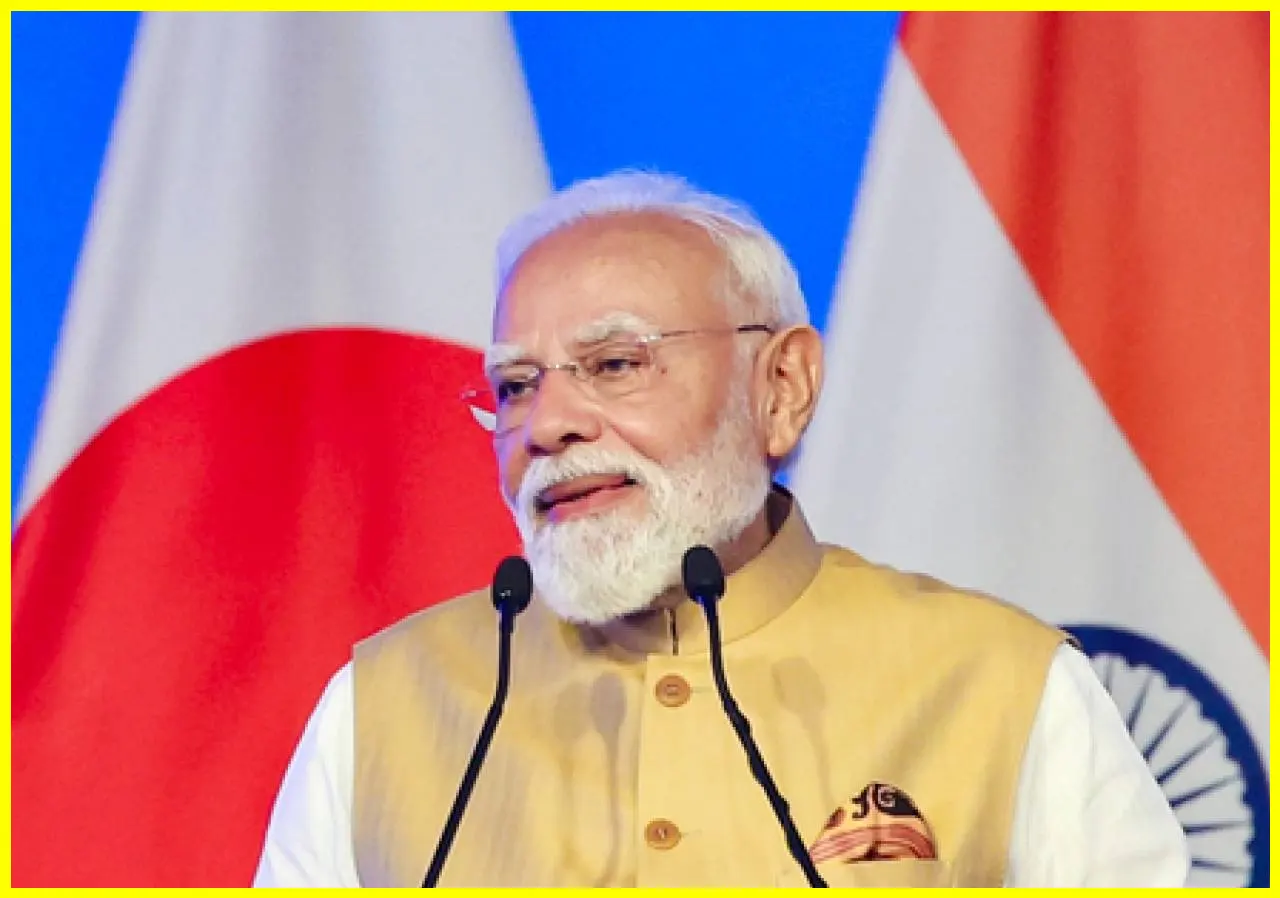
Gandhinagar, July 3: Prime Minister Narendra Modi will inaugurate the outsourced semiconductor assembly and test (OSAT) facility of CG Semiconductors in Sanand on July 4. Following the launch, the company will begin shipping semiconductor chips to customers both domestically and internationally. This project received approval from the central cabinet in February 2024 as part of India’s semiconductor mission.
CG Semiconductors, a subsidiary of CG Power and Industrial Solutions Limited, has established the OSAT facility in Sanand at a cost of ₹7,600 crores. The project is a joint venture with Japan’s Renesas Electronics and Thailand’s Star Microelectronics. With the commencement of this facility, the semiconductor ecosystem in Sanand is expected to strengthen further. According to Prime Minister Modi, the development of the semiconductor sector in India will mark a significant turning point for the decade.
The launch of the OSAT facility by CG Semiconductors, following the inauguration of the Micron plant and the establishment of Kensemi, is set to boost local economic development. The OSAT facility will handle the testing and packaging of chips for market distribution. CG Semiconductors is also in the process of constructing another plant, and together, these two OSAT facilities will produce a total of 15 million chips daily.
On July 4, the Prime Minister will inspect various semiconductor processes at the CG Semiconductors OSAT facility. He will be accompanied by Union Minister for Information Technology Ashwini Vaishnaw, Gujarat Chief Minister Bhupendra Patel, Deputy Chief Minister Harsh Sanghvi, and Minister of Science and Technology Arjun Modhwadia. Following the inauguration, the Prime Minister will address a gathering.
The OSAT facility will manufacture legacy chips such as QFN (Quad Flat No-Lead) and QFP (Quad Flat Package), as well as modern FC-BGA (Flip Chip Ball Grid Array) and FC-CSP (Flip Chip-Chip Scale Package) chips, catering to the needs of the automotive, electronics, industrial equipment, 5G devices, and power application sectors. Currently, over 300 employees are working at the facility, and it is expected to create 5,000 direct and indirect job opportunities over the next five years.
The Prime Minister has emphasized that the goal is not just to establish a factory but to create a complete ecosystem. India is now focusing on the entire semiconductor value chain, which includes everything from design engineers to machine manufacturers and logistics. The announcement of ‘India Semiconductor Mission 2.0’ is a significant step in this direction. As production increases, the demand for materials and components within India will grow, presenting the largest opportunity for local industries.
Gujarat is playing a leading role in advancing India’s semiconductor mission. The state was the first to announce a dedicated semiconductor policy to provide the necessary support for the semiconductor sector. Currently, six projects have been approved under the semiconductor mission in Gujarat, including Tata Electronics, Micron Technology, CG Semiconductors, Kensemi, Suchi Semiconductor, and Crystal Matrix, with a total investment of $14.7 billion.
The operational commencement of Micron Technology’s ATMP (Assembly, Testing, Marking, and Packaging) facility in February 2026 and Kensemi’s OSAT facility in March 2026 were crucial steps for India’s semiconductor sector. Recently, Suchi Semiconductor and Crystal Matrix also received approval to establish new semiconductor units. These projects will boost semiconductor production in India and strengthen Gujarat’s position as a major semiconductor hub.
Sanand has witnessed remarkable changes in industrial development in a short time. After Micron Technology and Kensemi, CG Semiconductors has now established a semiconductor plant here. Once known as an automobile hub, Sanand is now emerging as India’s first chip packaging cluster and a significant center in the global semiconductor value chain. It is developing into a semiconductor hub in India, comparable to Taiwan’s Hsinchu city and South Korea’s Gyeonggi province.
Under the leadership of Chief Minister Bhupendra Patel, Gujarat is now recognized not just as an investment destination but has evolved into a comprehensive ecosystem encompassing production, design, packaging, supply chain, skill development, research, logistics, and innovation. The Gujarat government has consistently supported the growth of the semiconductor industry through robust policies, modern infrastructure, swift approvals, and business-friendly governance. The state provides an environment that encourages investment while building global trust, from project organization to production commencement.
–
DSC
My name is Kuldeep Singh Chundawat. I am an experienced content writer with several years of expertise in the field. Currently, I contribute to Daily Kiran, creating engaging and informative content across a variety of categories including technology, health, travel, education, and automobiles. My goal is to deliver accurate, insightful, and captivating information through my words to help readers stay informed and empowered.