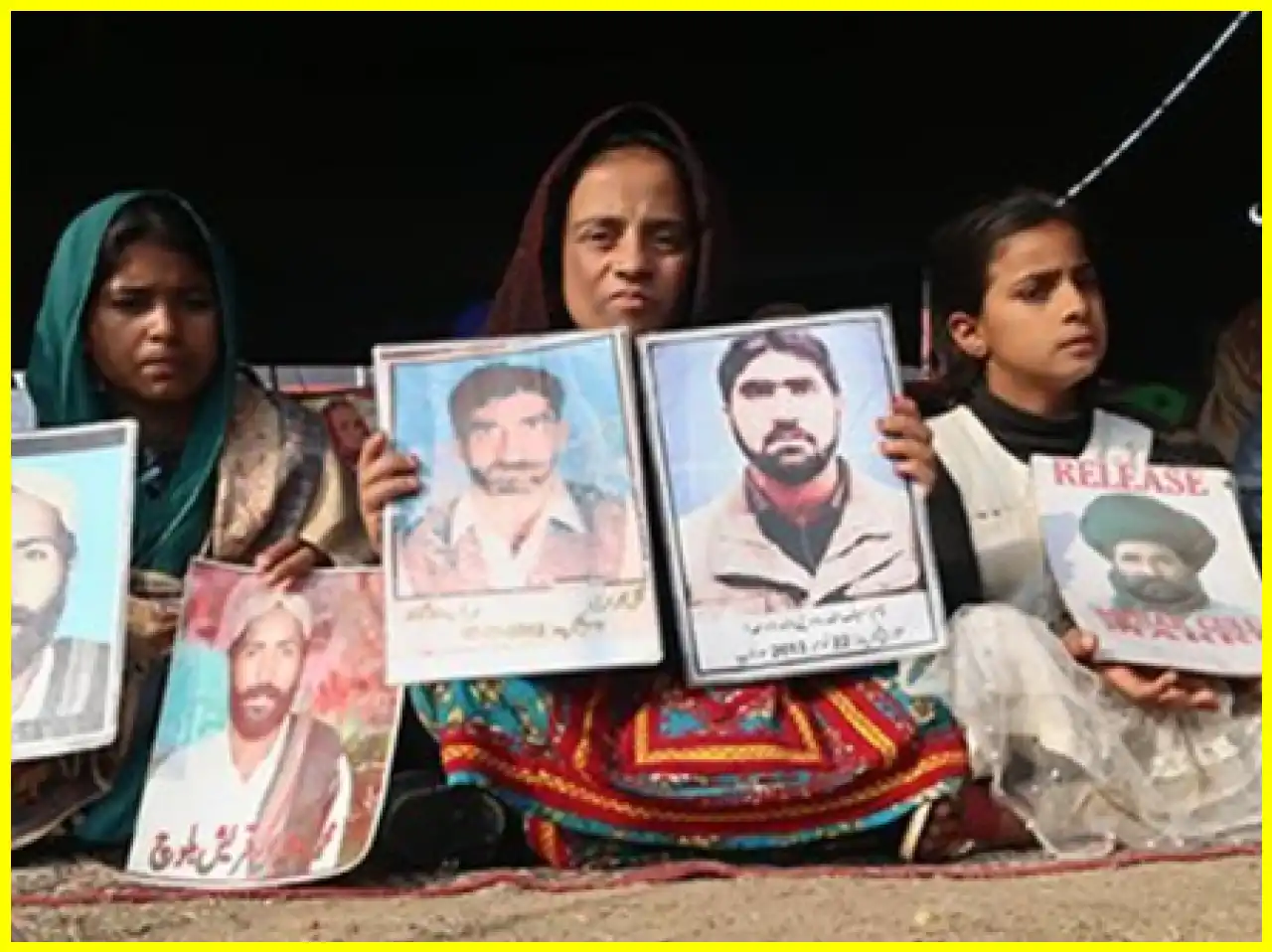
Quetta, March 24: The Baloch National Movement (BNM) has accused Pakistan of continuing its “inhumane policy” of collective punishment in Balochistan. The organization stated, “Can you imagine that in the 21st century, the punishment for one person’s alleged crime is imposed on the entire family? Collective punishment is a practice linked to colonialism and dictatorship. Yet, in Balochistan, the Pakistan government continues to enforce this inhumane policy, and it has recently acknowledged it openly.”
The BNM expressed concern that collective punishment in Balochistan is not merely a theoretical issue but a living reality for thousands of victimized families, where justice and the rule of law are nearly absent, and fundamental human rights are systematically violated.
As a result, the province has become “a large prison, a killing field, and a torture zone.” Highlighting the increasing violence in Balochistan, the BNM reported that within just 20 days, 22 Baloch youths were forcibly abducted from various areas of the Panjgur district, tortured in custody, and subsequently killed, with their bodies discarded.
It further stated, “Many individuals’ only ‘crime’ was that their relatives were associated with the Baloch National Movement or were advocating for human rights in Europe.” The BNM noted that the case of its chairman, Naseem Baloch, exemplifies the policy of “political repression and collective punishment,” as his elderly, ill father and two relatives were abducted by the Pakistani army solely due to Naseem’s political role.
The organization revealed that Naseem Baloch had previously been forcibly disappeared and tortured twice before being exiled. As incidents of forced disappearances and coercion increase in Balochistan, there is a rising trend of young men and women, and even children, being forcibly taken. Furthermore, families are pressured to hold press conferences and publicly deny their relationship with the accused.
In many cases, victims are never presented in court, denied legal assistance, and after being held for months or years, are coerced into confessing to crimes in front of the media. The BNM has urged the international community, human rights organizations, and global institutions, including the United Nations Human Rights Council in Geneva, to immediately address human rights violations in Balochistan, ensure independent investigations, and punish the guilty.
The organization also appealed to the global community to pressure Pakistani authorities to end the policies of “forced disappearances” and “collective punishment.”
Bhupendra Singh Chundawat is a seasoned technology journalist with over 22 years of experience in the media industry. He specializes in covering the global technology landscape, with a deep focus on manufacturing trends and the geopolitical impact on tech companies. Currently serving as the Editor at Udaipur Kiran, his insights are shaped by decades of hands-on reporting and editorial leadership in the fast-evolving world of technology.