

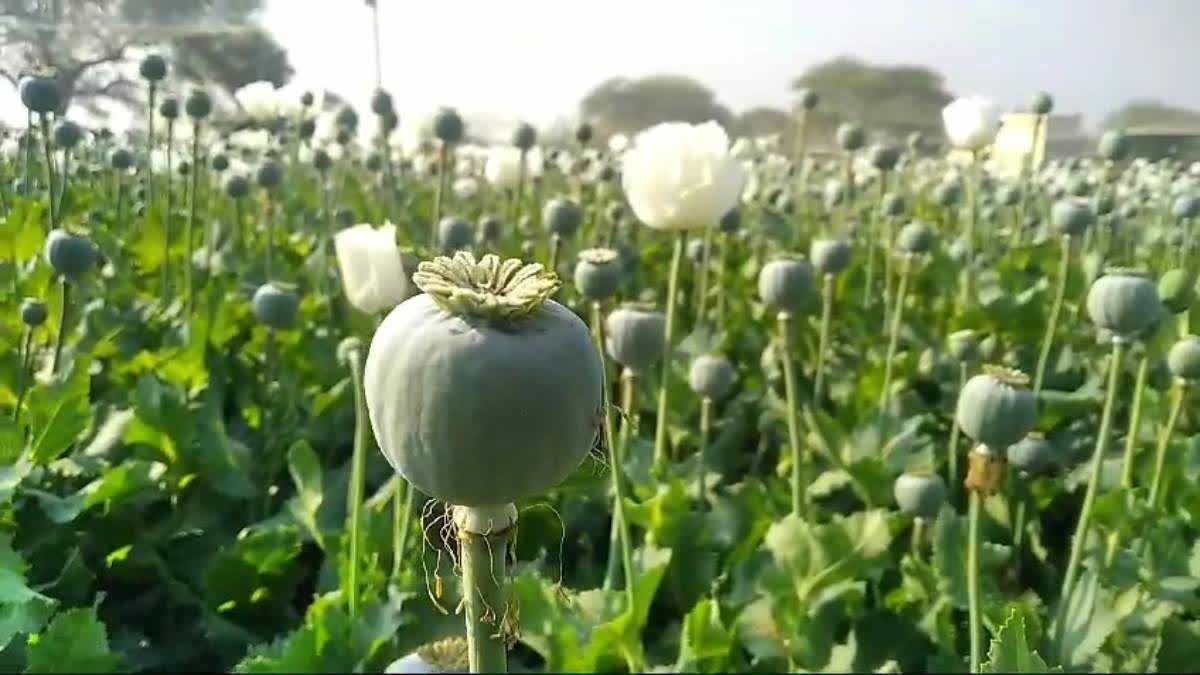
Chittorgarh (Patrika English News): The Union Finance Ministry has released the 2025–26 opium cultivation policy, introducing stricter rules that could see several farmers lose their licenses while others regain previously suspended permits.
According to the policy, farmers cultivating under the Concentrated Poppy Straw (CPS) method will face a one-year suspension of their licenses if they deliver less than 80 kg of poppy husk per 10 aari (local unit of land).
Key Provisions of the 2025–26 Policy
-
Farmers who, in 2024–25, delivered 90 kg or more per 10 aari under CPS will now be eligible for a chiraayi (lancing) license this year, subject to other conditions.
-
Farmers whose CPS licenses were suspended last year for producing less than 67 kg will have their permits reinstated for 2025–26.
-
However, any farmer failing to meet the 80 kg threshold this year will see their license suspended for one year.
-
Other provisions of the new policy remain largely unchanged from last year, disappointing many cultivators.
Farmers’ Concerns Ignored
Farmers and public representatives had urged the government to frame a more farmer-friendly policy, including demands to reduce the required morphine average. The Finance Ministry, however, has rejected this key demand, leaving many cultivators dissatisfied.
Processing Bottlenecks
Sources indicate that India currently lacks processing plants for extracting morphine, codeine, and other derivatives directly from poppy husk. As a result, government warehouses are already overflowing with CPS stock. Officials hinted that CPS licenses may be reduced further in the coming years unless new processing facilities are established.
Demand for Three-Year Average
Farmers argue that license eligibility should be determined based on a three-year average yield rather than a single year’s performance. They believe this would prevent unfair cancellations due to one poor harvest.
The new policy, while offering limited relief to some, is expected to intensify discontent among opium cultivators across Rajasthan and Madhya Pradesh — the key opium-producing states of India.
Bhupendra Singh Chundawat is a seasoned technology journalist with over 22 years of experience in the media industry. He specializes in covering the global technology landscape, with a deep focus on manufacturing trends and the geopolitical impact on tech companies. Currently serving as the Editor at Udaipur Kiran, his insights are shaped by decades of hands-on reporting and editorial leadership in the fast-evolving world of technology.